Relevance over reach
Each lead carries a real detail to open with, because that is what earns replies.
Most sales prospecting tools optimize for how many contacts you can pull. The reply rate says that is the wrong target. Lead Outreach Agent optimizes for the thing that actually books meetings: a relevant, contactable lead and a first message that references something true - drafted for you and ready to edit.
Pay only for what you use · $1 = 100 credits · Credits never expire · Zero-result searches refunded
Review the actual search setup and result format before spending credits or starting a campaign.
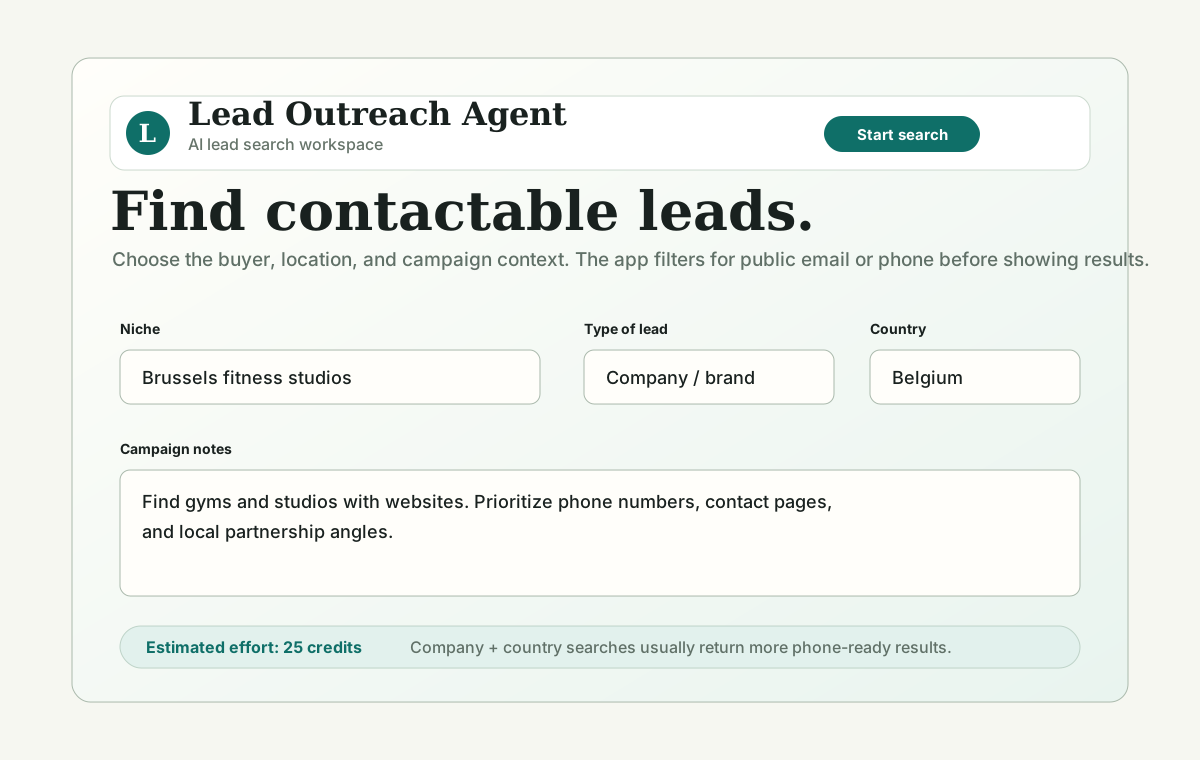
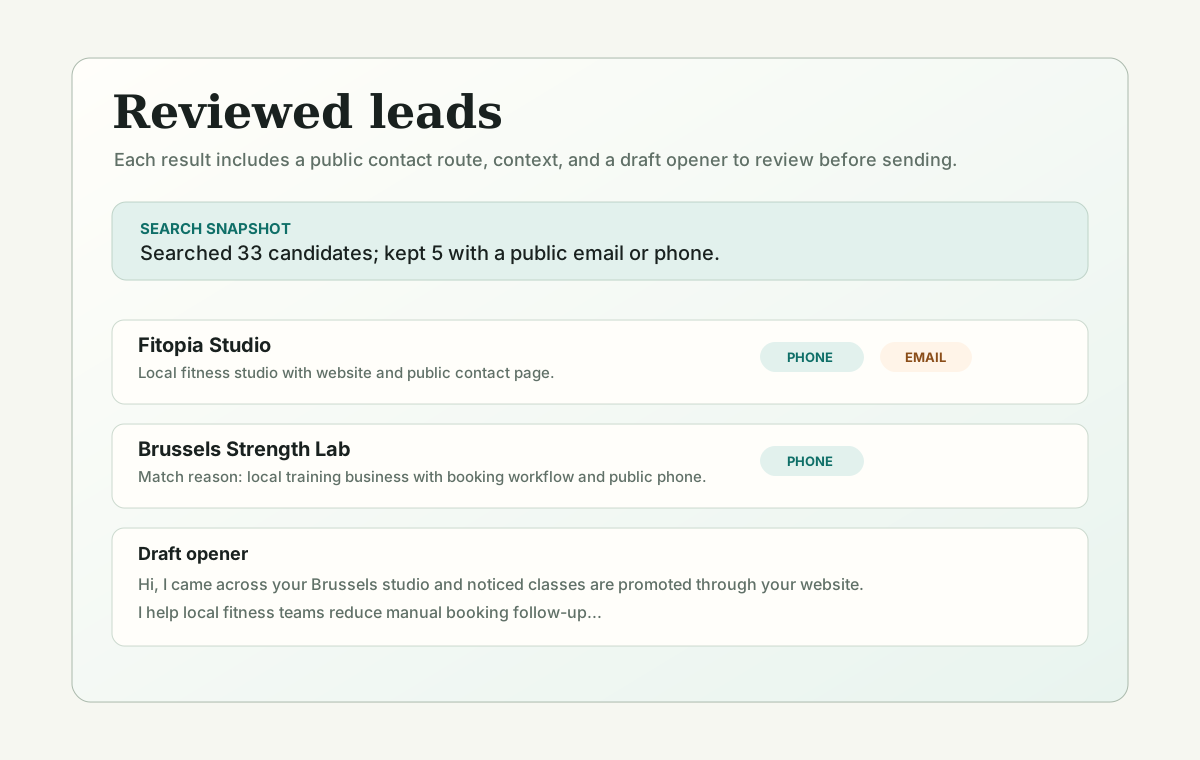
Each lead carries a real detail to open with, because that is what earns replies.
No guessed addresses, no dead rows, no wrecked sender reputation.
Use the lead-cost calculator to plan a small, honest first test.
Use these findings as context, not promised results. Each source includes its sample or method and the limitation that matters when applying it.
Teams that use AI to make each message more relevant report meaningfully higher reply rates - signal-personalized outreach around 15-25% versus a 3-5% cold average - while teams that use AI only to send more messages underperform the human baseline.
Aggregated analyses put B2B contact-data decay at roughly 22.5-30% per year - about 2.1% per month - and as high as 70% at fast-moving tech companies, with job-title changes the single biggest driver.
Sales reps report spending almost one workday per week prospecting; 92% of sales professionals using AI agents say AI benefits prospecting.
B2B buyers use an average of ten channels during the purchasing journey, and market leaders are four times more likely to deploy true one-to-one personalization.
Results need a usable public email or phone number and enough source context for review.
Each result includes context to help you check why the lead fits before outreach.
Drafts remain editable and should be reviewed for accuracy, relevance, and compliance before sending.
Seven tools worth knowing, ordered for a small sales team that wins on relevance rather than volume. Each is useful in its lane; the ranking reflects fit for booking meetings from personalized outreach.
| # | Tool | Best for | Watch out for |
|---|---|---|---|
| 1 | Lead Outreach Agent | Small sales teams: relevant, contactable leads with a drafted opener | Not a sequencer - you send from your own stack |
| 2 | Apollo.io | Contact database plus built-in sequencing in one place | Deliverability needs care once you send at volume |
| 3 | Outreach / Salesloft | Enterprise sequencing and pipeline management | Priced and built for large sales orgs |
| 4 | ZoomInfo | Deepest B2B data with buyer-intent signals | Expensive and contract-based |
| 5 | Clay | Enrichment and signal automation you assemble | Setup-heavy; you build the workflow |
| 6 | Lusha | Fast contact reveal inside the browser | Credit and phone-reveal cost; accuracy around 81% |
| 7 | LinkedIn Sales Navigator | Prospect research and saved-search alerts | No contact export - pair it with a finder |
Two philosophies of sales prospecting tool. The right target is the meeting booked, not the row exported.
| Dimension | Volume-first tool | Lead Outreach Agent |
|---|---|---|
| Optimizes for | Records pulled | Replies earned |
| Personalization | Bolted on later | Match detail feeds the draft |
| Contactability | Verify after export | Guaranteed before you see the lead |
| Deliverability risk | High (guessed sends) | Lower (public, checked routes) |
| Best cadence | Big blast | Sustainable weekly loop |
The best sales prospecting tool is the one that books meetings, and meetings come from relevant messages to reachable people - not from the biggest export. The ranking below is written for a small sales team optimizing for replies: discovery-and-personalization tools rank highest, sequencers and enterprise databases rank lower here because they solve a different part of the funnel. Full disclosure - Lead Outreach Agent is our tool, placed first for this audience; every other tool gets a straight take and a real catch.
You can buy millions of records; you cannot buy replies. Signal-personalized outreach reports reply rates around 15-25% versus a 3-5% cold average, and teams that use AI just to send more messages underperform a human doing fewer, better ones. A prospecting tool should therefore be judged on how much relevance it puts into each message, not how large an export it produces.
Every lead Lead Outreach Agent returns comes with the public detail that made it a match - a recently added service, a manual booking flow, a hiring signal. That detail is not decoration: it is the raw material for a specific opener. The drafted first email is built around it, so your message starts from a real observation instead of "I hope this email finds you well."
A prospect you cannot reach is not a prospect. The tool only shows leads with a public email or phone and records the source, so your pipeline is not padded with rows that go nowhere. That also protects deliverability - you are not sending to guessed addresses that bounce and drag down your sender reputation.
Sustainable prospecting is a weekly loop sized to how many messages you can genuinely personalize. Pull a small, relevant batch, write specific first messages, send from your own stack, and track replies to sharpen the next search. This beats the binge-and-bust pattern of exporting thousands of contacts, blasting them once, and burning the domain.
Lead Outreach Agent is the discovery-and-first-draft layer. It does not replace your CRM or your sequencer; it feeds them better inputs - reviewed, contactable leads and a strong opening message. Pair it with the lead-cost calculator to size a first test, and with your existing sending tools to run and measure the campaign.
Measure the campaign on outcomes, not activity. Track three numbers: the share of found leads with a usable public route, the reply rate on the messages you send, and the share of replies that move a deal forward. If contactability is low, tighten the niche; if replies are low, your opener probably is not specific enough; if positive replies are low, revisit the offer or the audience. Because you start from a small, reviewed batch, each of these is cheap to read and quick to correct - which is the whole point of a reply-first prospecting loop over a one-time bulk blast.
They are tools that help sellers find and reach potential buyers, from large databases to niche-first discovery tools. The best choice depends on whether you are limited by how many contacts you can find or by how relevant you can make each message.
Usually not. Reply data shows relevance drives meetings far more than volume - signal-personalized outreach can reply at 15-25% versus 3-5% cold. A tool that helps you personalize beats one that just exports more names.
No. It finds public, contactable leads and drafts a first message; you review, edit, and send from your own email tool or CRM. That keeps sending, tracking, and compliance in a stack you control.
Send to real, public contact routes rather than guessed addresses, keep messages specific and short, and honor opt-outs. Only showing contactable leads is part of how the tool helps you avoid bounce-heavy sends.
Databases optimize for scale and enrichment. Lead Outreach Agent optimizes for relevance and contactability on smaller, targeted campaigns, and hands you a first draft rather than just a record.
Public availability is not consent. You must have a lawful basis, identify yourself honestly, and provide a working opt-out under the rules that apply to your recipients.
Start with one narrow search, review the contactability and match reasons, then use the related tools or benchmark pages to decide whether the niche is worth scaling.