Use Lead Outreach Agent for
Niche-first public search, contactability checks, and first-draft outreach.
Database tools are useful when you already know the market and need volume. Lead Outreach Agent is different: it starts from a niche prompt, searches public sources, filters for contactability, and drafts context-aware outreach.
Pay only for what you use · $1 = 100 credits · Credits never expire · Zero-result searches refunded
Review the actual search setup and result format before spending credits or starting a campaign.
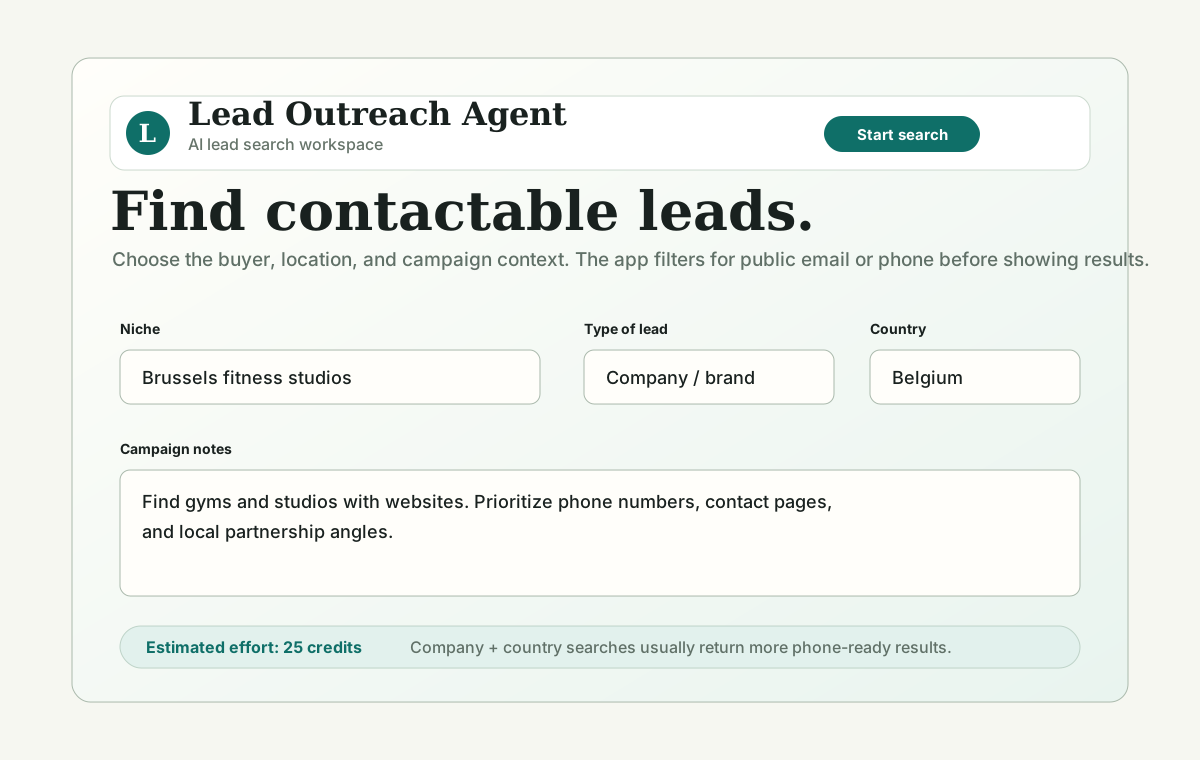
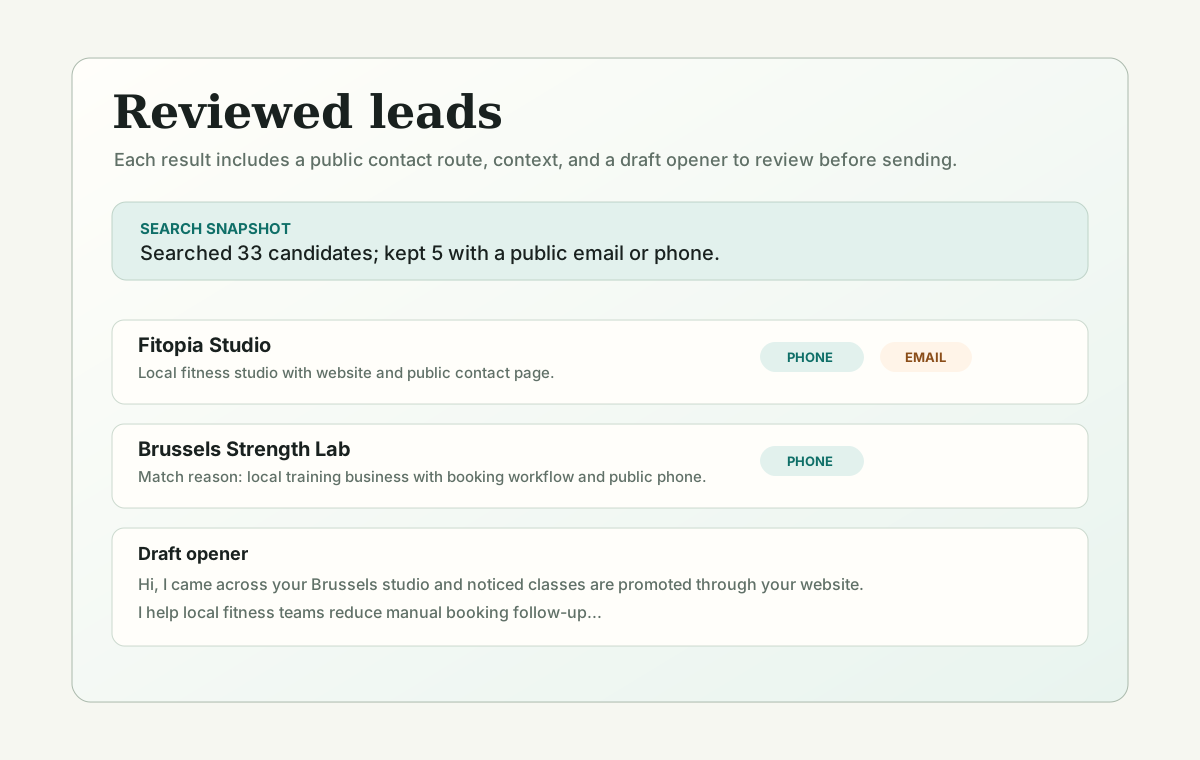
Niche-first public search, contactability checks, and first-draft outreach.
Large database workflows, complex enrichment, and sales ops depth.
Use Lead Outreach Agent to test markets, then enrich winners if the campaign proves demand.
Use these findings as context, not promised results. Each source includes its sample or method and the limitation that matters when applying it.
Sales reps report spending almost one workday per week prospecting; 92% of sales professionals using AI agents say AI benefits prospecting.
B2B buyers use an average of ten channels during the purchasing journey, and market leaders are four times more likely to deploy true one-to-one personalization.
Results need a usable public email or phone number and enough source context for review.
Each result includes context to help you check why the lead fits before outreach.
Drafts remain editable and should be reviewed for accuracy, relevance, and compliance before sending.
Apollo is a large contact database with built-in sending. Lead Outreach Agent is a niche-first research workflow. The differences that actually change your decision (competitor details as advertised in 2026):
| Dimension | Apollo | Lead Outreach Agent | What it means for you |
|---|---|---|---|
| Core model | A stored database of 240M+ contacts you filter and export | A live search of public sources, run per query | Apollo pulls from records that may age; Lead Outreach Agent finds businesses that are public right now |
| Contact data | Stored emails and phones, high advertised accuracy | Only public emails or phones, checked at the source | Lead Outreach Agent skips a lead with no public route instead of guessing a pattern |
| Built-in sending | Yes: email sequencing and a dialer | No: it drafts the first email; you send it | Apollo is an all-in-one engine; Lead Outreach Agent is research plus a first draft |
| Pricing (2026) | Free tier; paid plans from about $49 per user per month on annual billing | Credit-based; searches that return nothing refund their credits | Lead Outreach Agent bills per search, not per seat |
| Best for | Established sales teams working a known ICP at volume | Founders and agencies testing niches in small reviewed batches | Pick by stage: a proven motion, or a niche you are still validating |
Apollo-style tools usually start from database filters. Lead Outreach Agent starts from a concrete search request and public evidence.
Use it for small campaigns, local businesses, creators, sponsor lists, and founder-led testing before buying a large database workflow.
Use a mature database when you need large sales ops workflows, CRM enrichment, and established company/contact records at scale.
A founder testing a local or niche market can start with a prompt such as Shopify stores in California or Brooklyn gyms with public contact routes. Lead Outreach Agent is useful before the market is proven because it returns context, public routes, and draft angles instead of asking the user to build a large filtered database list first.
A database-first product is often better when a sales team already has a defined ICP, CRM workflow, high-volume outbound process, and a need for many standardized contact records.
The honest split comes down to stage and volume, not which tool is 'better'. If you have a proven ICP and a team pushing hundreds of emails and calls a day through a CRM, Apollo's database and built-in dialer earn their per-seat price. If you are a founder, freelancer, or small agency still figuring out which niche replies, a 240-million-contact database is mostly noise you have to filter and clean - and you would still need a separate tool to write the outreach.
This comparison is not saying one product is always better. The right tool depends on whether you need a large database, enrichment workflow, CRM process, or fast niche-first research from public sources.
Lead Outreach Agent is stronger for quick niche exploration, local businesses, creator sponsor lists, and founder-led campaigns where the user needs context and contactability more than a huge database export.
A mature database or enrichment platform can be stronger for sales teams with existing CRM workflows, large outbound volume, complex waterfall enrichment, and dedicated operations people.
Choose Lead Outreach Agent if you want a small reviewed list, public contact routes, match reasons, and draft emails. Choose a database/enrichment suite if you need massive list building, CRM syncing, and many enrichment fields.
They bill differently, so it depends on use. Apollo charges per user seat (from about $49/user/month on annual billing in 2026); Lead Outreach Agent is credit-based per search and refunds credits when a search returns nothing. For a small team running occasional niche searches, per-search billing is usually cheaper than paying for seats you don't fill.
For a high-volume sales team that lives in a CRM with an in-app dialer and sequencer, no - Apollo does jobs Lead Outreach Agent deliberately doesn't (sending, calling, contact-record management). For niche testing and small reviewed campaigns, many users don't need a database that large at all.
No, and that's intentional. Apollo's value is a huge stored database; Lead Outreach Agent's value is returning only businesses with a real, public contact route right now, plus a reason each fits. It trades raw volume for contactability and context.
Start with one narrow search, review the contactability and match reasons, then use the related tools or benchmark pages to decide whether the niche is worth scaling.