Global sales professionals in the 2026 sample.
Cited research
Outbound sales research worth using carefully
These studies can support product education and promotional content without turning correlation into a guarantee. Every statistic includes its source, sample context, and an explicit limitation.
At a glance
What you get on this page
A source-linked review of prospecting time, cold email, cold calling, personalization, and B2B buyer research, every stat with its method and its limitation.
Workflow preview
See the workflow before starting a search
Review the actual search setup and result format before spending credits or starting a campaign.
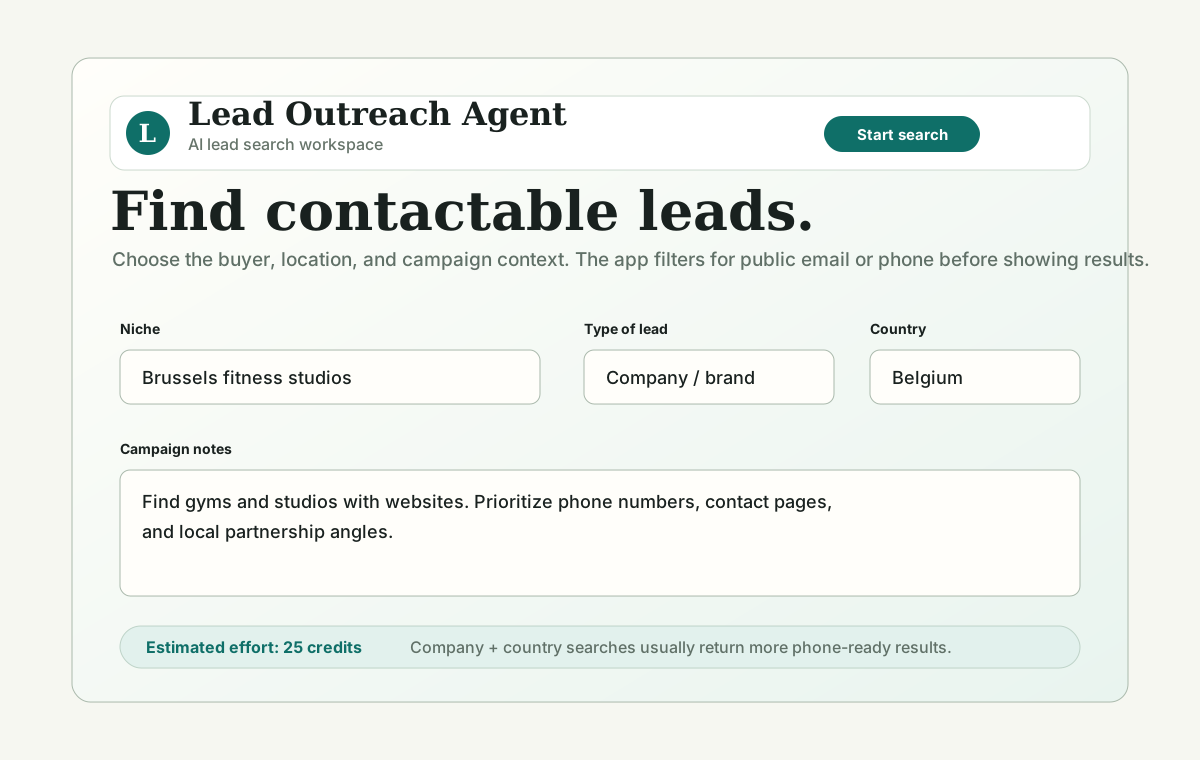
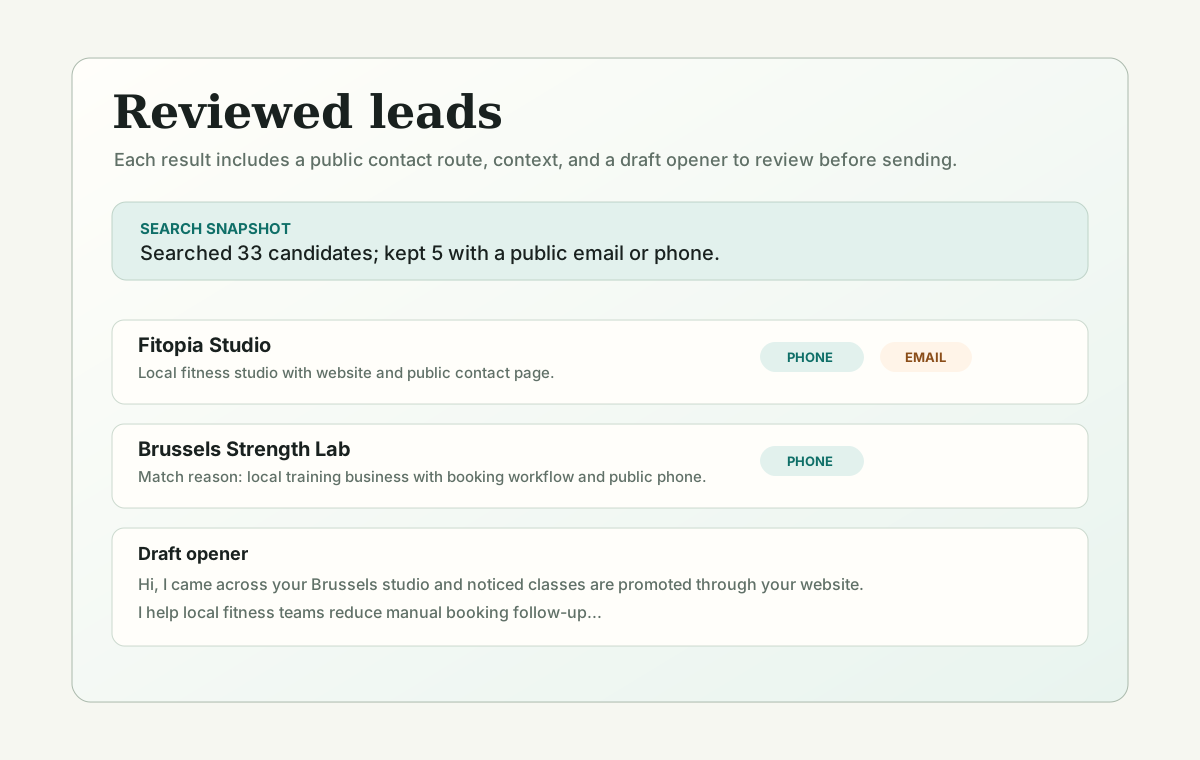
Quick demo path:
1. Pick a niche and country.
2. Watch the search move through public sources and contact checks.
3. Review kept leads and edit the first outreach draft.
B2B decision-makers across 13 countries.
Cold outbound emails in the published guide.
Cold emails sent during 2025.
Outreach emails, clearly retained as older research.
Senior B2B marketers across six countries.
Source-linked evidence
Research behind this page
Use these findings as context, not promised results. Each source includes its sample or method and the limitation that matters when applying it.
State of Sales, 7th Edition
Sales reps report spending almost one workday per week prospecting; 92% of sales professionals using AI agents say AI benefits prospecting.
- Method
- Survey of 4,050 sales leaders, representatives, operations staff, and support professionals across 19 country groups and multiple industries.
- Use carefully
- The 92% figure only covers respondents already using AI agents and is a perception measure, not a controlled productivity test.
The surprising economics of B2B growth
B2B buyers use an average of ten channels during the purchasing journey, and market leaders are four times more likely to deploy true one-to-one personalization.
- Method
- Global B2B Pulse survey of nearly 4,000 decision-makers across 13 countries and multiple industries.
- Use carefully
- The study covers broad B2B buying behavior; it does not isolate cold-email performance or prove that personalization alone causes growth.
How to master cold email
In its dataset, the top 10% of representatives generated 4.2 times as many replies and booked 8.1 times as many meetings as average representatives; emails with 51-100 words had the highest reply rate among the displayed length bands.
- Method
- Analysis of more than 85 million cold outbound emails, segmented by representative performance and message characteristics.
- Use carefully
- The public guide summarizes the analysis but does not publish a full sampling protocol, confidence intervals, or controls for account quality and sender reputation.
B2B cold email response rates
Across 2025 campaigns, 34,393 replies from 7,530,489 sends produced a 0.45% reply rate; companies with 11-50 employees replied at 0.49% versus 0.22% for enterprises with 10,000 or more employees.
- Method
- First-party campaign analysis using unique replies divided by total emails sent, excluding auto-replies and bounce notifications.
- Use carefully
- The data comes from one provider's client campaigns and its stricter denominator is not directly comparable with reports that divide replies by opens or unique recipients.
Email outreach study
Personalized email bodies were correlated with 32.7% more replies, while only 8.5% of the analyzed outreach messages received a response.
- Method
- Analysis of 12 million outreach emails covering subject lines, personalization, follow-ups, timing, and campaign type.
- Use carefully
- The dataset is older and focuses heavily on content and link outreach, so it should not be presented as a current B2B sales benchmark.
2025 B2B Marketing Benchmark
Ninety-four percent of surveyed B2B marketers agreed that trust is key to B2B brand success, and 78% reported using video in their programs.
- Method
- Ipsos survey of 1,500 senior B2B marketers across the United States, United Kingdom, Germany, Brazil, India, and Australia.
- Use carefully
- This measures marketer opinions and reported practices, not buyer conversion caused by any single trust or video tactic.
The State of Cold Calling in 2026
The report places the industry cold-call success benchmark at 2.7% and reports that an average of 1.55 call attempts was needed to reach a prospect in its current data.
- Method
- Current calling benchmark combining WHAM industry data with Cognism's own sales-team results and regional analysis.
- Use carefully
- Provider-reported internal performance and the industry benchmark use different populations; neither should be promised as a result for a new campaign.
Results need a usable public email or phone number and enough source context for review.
Each result includes context to help you check why the lead fits before outreach.
Drafts remain editable and should be reviewed for accuracy, relevance, and compliance before sending.
Live benchmark telemetry
Aggregated search quality snapshot
Aggregated from recent Lead Outreach Agent search-completed events. No individual leads, customers, or search prompts are exposed.
Search-completed events in the current sample.
Total leads requested across the sample.
Leads with a public email or phone after automated checks; this does not prove ownership or deliverability.
Leads that passed automated checks divided by requested leads.
Leads that passed automated checks divided by deduplicated candidates reviewed.
Searches that returned zero leads and triggered credit return.
Average provider query count per completed search.
How this evidence library is maintained
The page links to the organization that ran or published each study, records the denominator or survey sample when available, and keeps older research clearly dated. Findings are summarized rather than copied.
- Prefer source-owned reports over statistic roundups.
- Keep reply-rate denominators visible.
- Separate survey opinion from observed campaign data.
- Never convert correlation into a promised result.
What the research supports
The evidence consistently supports a restrained position: prospecting consumes meaningful seller time, buyers use several channels, relevance and personalization matter, and realistic outreach response rates can be low. That makes smaller reviewed campaigns more defensible than fake-volume claims.
What the research does not prove
No external benchmark proves that Lead Outreach Agent will save a fixed number of hours, produce a fixed reply rate, or generate revenue. Use the calculators as scenarios and measure results against your own niche, offer, sender reputation, and legal requirements.
Questions people ask before using this
What is the best next step after reading this page?
Start with one narrow search, review the contactability and match reasons, then use the related tools or benchmark pages to decide whether the niche is worth scaling.