Best for volume
Large databases and enrichment suites.
The best lead generation tool depends on whether you need a giant database, an enrichment workflow, local business contacts, or a small reviewed list with public email or phone routes.
Pay only for what you use · $1 = 100 credits · Credits never expire · Zero-result searches refunded
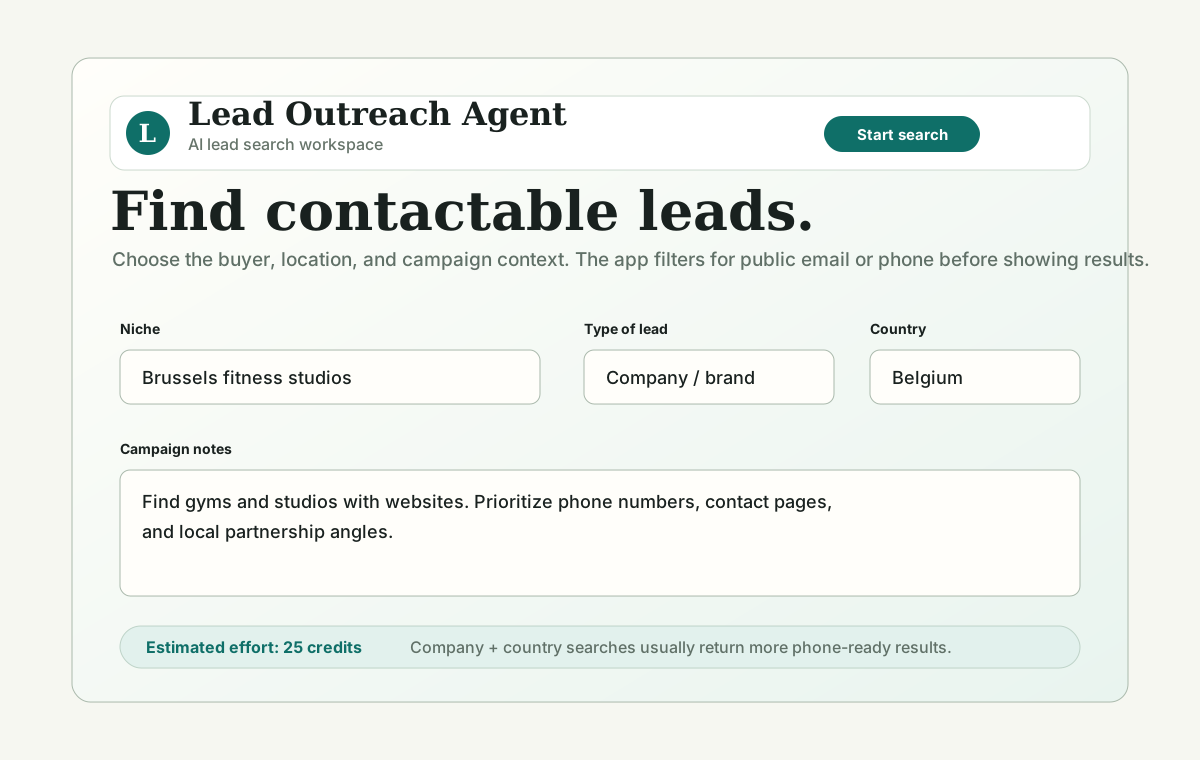
Review the actual search setup and result format before spending credits or starting a campaign.
Large databases and enrichment suites.
Maps-style sources plus public website review.
Small AI-assisted batches with match reasons.
Use these findings as context, not promised results. Each source includes its sample or method and the limitation that matters when applying it.
Sales reps report spending almost one workday per week prospecting; 92% of sales professionals using AI agents say AI benefits prospecting.
B2B buyers use an average of ten channels during the purchasing journey, and market leaders are four times more likely to deploy true one-to-one personalization.
More constrained searches can cost more because they require additional research, contact checking, and drafting work.
If a completed search returns no contactable leads, its search credits are returned automatically.
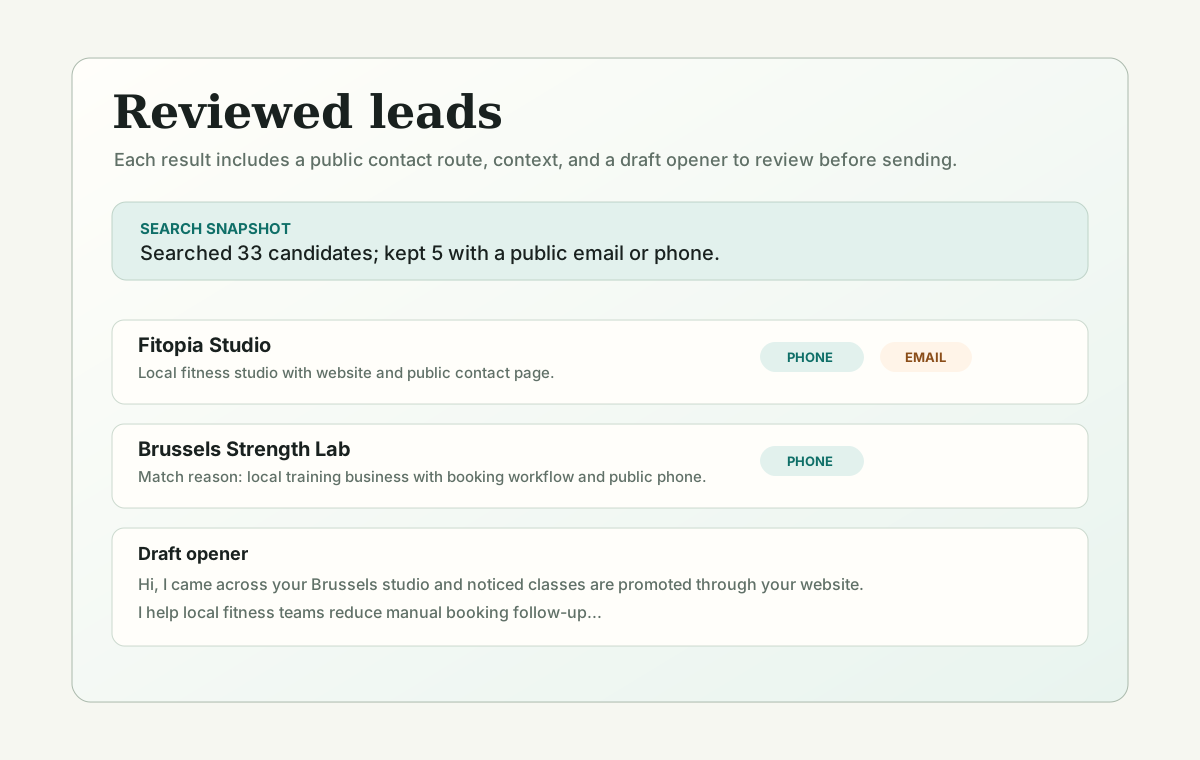
Screenshots show the niche input, public contact routes, match reasons, and editable drafts before you start.
Results need a usable public email or phone number and enough source context for review.
Each result includes context to help you check why the lead fits before outreach.
Drafts remain editable and should be reviewed for accuracy, relevance, and compliance before sending.
Use this comparison to decide whether the workflow fits your campaign before spending credits or time.
| Option | Best for | Tradeoff | Recommended use |
|---|---|---|---|
| Manual research | Learning a brand-new niche | Slow and hard to repeat | Use it for a few examples, then standardize the workflow |
| Large generic database | Known markets and high-volume teams | Can be stale or too broad | Use after validating that the niche and message convert |
| Single-purpose contact finder | Known companies or domains | Does not explain fit by itself | Use when the lead is already known |
| Lead Outreach Agent | Small reviewed searches with public contact routes | Needs human review before outreach | Use for niche testing, local searches, and campaign prep |
Most buyers should separate lead generation tools into five buckets: databases, enrichment tools, outreach sequencers, Google Maps/local scrapers, and AI research agents. Each bucket solves a different job, so comparing only on list size creates bad decisions.
Lead Outreach Agent fits the AI research bucket. It is useful when the user wants a small batch of public, contactable leads with match reasons and a draft message, rather than a large export that still needs manual cleanup.
Choose a tool by asking: can it find my exact niche, does it show the public contact route, does it explain why a lead fits, does it avoid fake contacts, and can I review the outreach before sending?
A buyer comparing options starts by naming the job: a founder validating a niche needs contactable prospects and context, not a 200-million-row database. Running one small search - a niche, a country, five leads - shows within a day whether public contact data even exists for that market, which no feature list can tell you.
Before outreach, review the source page, public contact route, business fit, geography, and draft message. Remove any unsupported claim, avoid sensitive assumptions, and make sure the reason for contact is visible from public information.
Many lead generation tools focus on volume. Lead Outreach Agent focuses on whether a lead can actually be contacted from public information. Candidates without a usable email or phone are skipped, and zero-result searches return credits instead of padding the result table with fake matches.
No AI search tool can guarantee sales, consent, deliverability, or complete coverage of the public web. Some niches are naturally hard because contact details are hidden, results are dominated by directories, or the requested country and size filters are too strict. The best use is small, reviewed batches that improve over time.
The biggest database is not the best tool - it is the best tool for teams that already know their market. Match the category to your situation: a mature sales team needs a database and CRM; a high-volume personalizer needs enrichment; a founder or agency validating a niche needs contactable prospects with context and a draft.
Before comparing feature lists, run one small real search in your actual niche. It answers the only question a spec sheet cannot: does usable public contact data even exist for this market? If a five-lead test comes back thin, no amount of database size will fix the underlying scarcity - and if it comes back rich, you may not need a large database at all.
Lead Outreach Agent uses site credits for the research and checks behind a search. Focused company searches with clear geography are usually simpler than broad, hidden-contact, or creator-heavy searches. Start with five leads, then scale only if the contactability and fit are good.
Product screenshots show the search setup, progress, kept leads, skipped candidates, public contact route, match reason, and editable outreach draft.
No. It is an AI-assisted public research workflow that searches, filters, and drafts outreach for small reviewed batches.
Often yes. Use a research tool to test niches, then use enrichment or CRM tools once a campaign proves demand.
There is no single best - it depends on the job. A known-market sales team wants a database, a high-volume personalizer wants enrichment, someone with a known company wants an email finder, and a founder validating a niche wants contactable prospects with context.
Usually not. Early on, a huge database is mostly noise you have to filter. A small, reviewed search tells you whether public contact data even exists for your niche - which matters more than database size at that stage.
Start with one narrow search, review the contactability and match reasons, then use the related tools or benchmark pages to decide whether the niche is worth scaling.