Use Lead Outreach Agent for
Niche-first public search, contactability checks, and first-draft outreach.
Email lookup tools are useful when you already know the company domain. Lead Outreach Agent helps earlier in the process: discovering the lead, checking public contact routes, and drafting the first message.
Pay only for what you use · $1 = 100 credits · Credits never expire · Zero-result searches refunded
Review the actual search setup and result format before spending credits or starting a campaign.
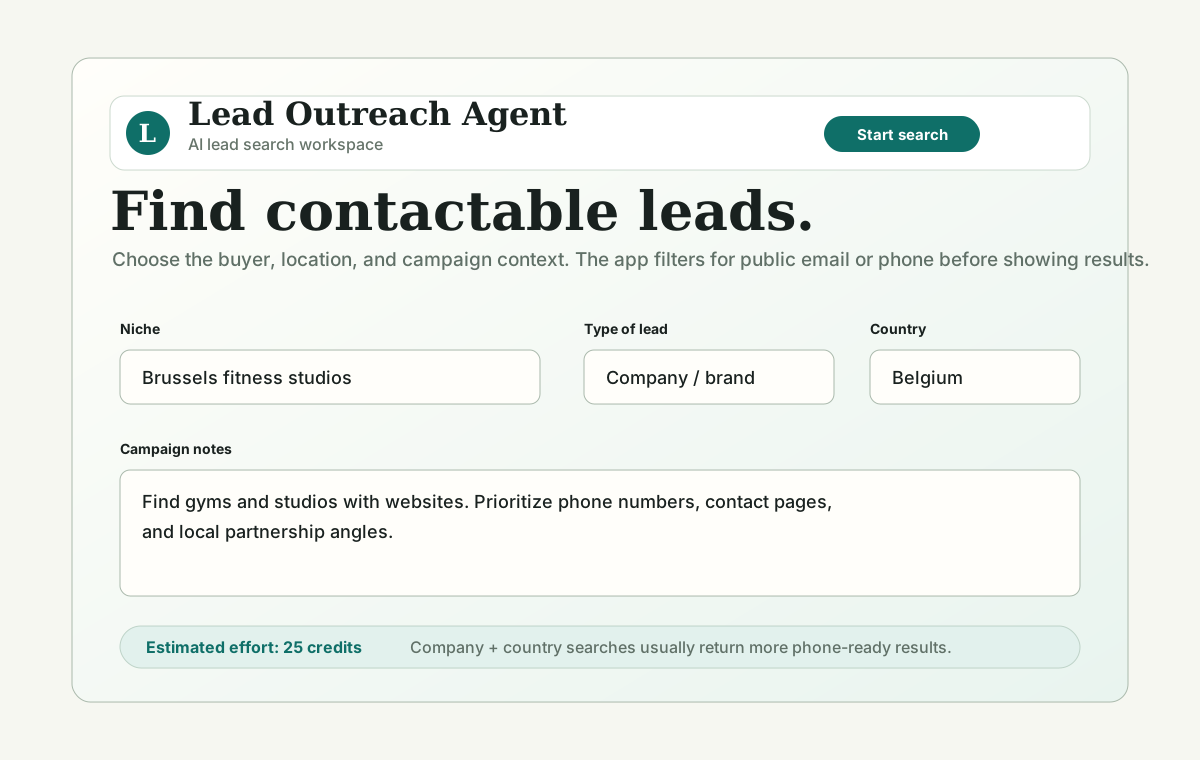
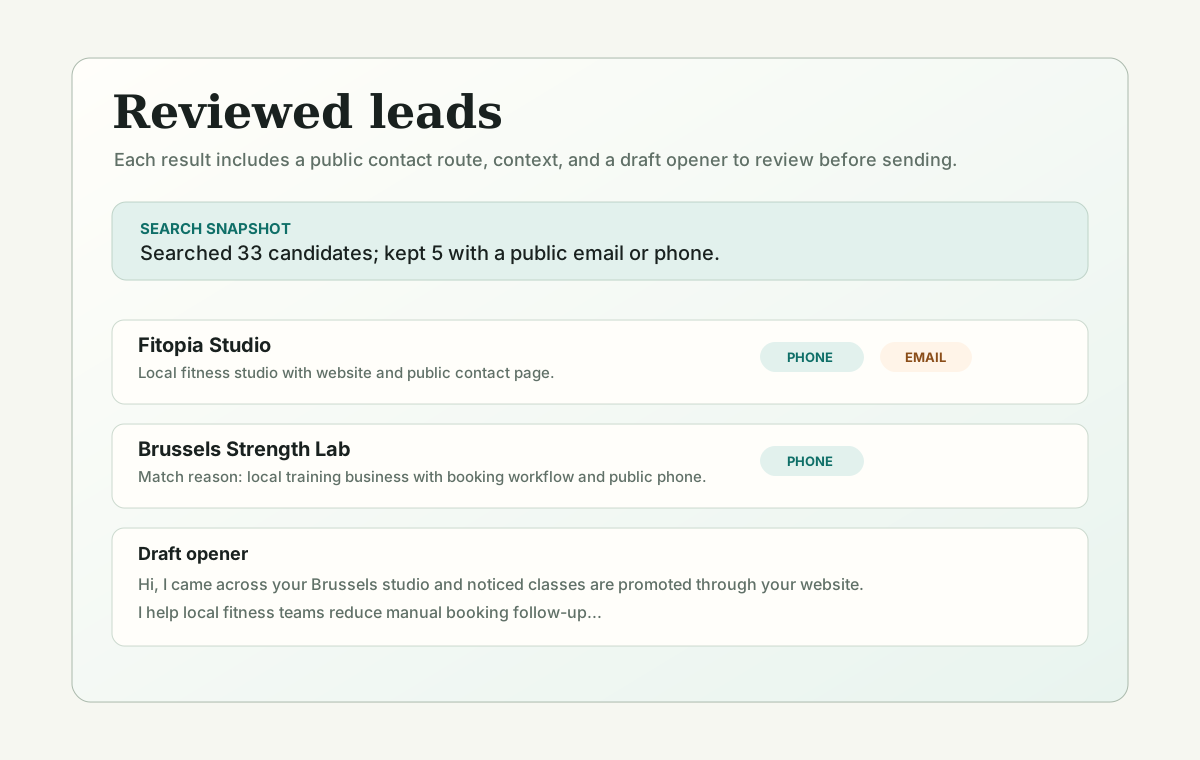
Niche-first public search, contactability checks, and first-draft outreach.
Large database workflows, complex enrichment, and sales ops depth.
Use Lead Outreach Agent to test markets, then enrich winners if the campaign proves demand.
Use these findings as context, not promised results. Each source includes its sample or method and the limitation that matters when applying it.
Sales reps report spending almost one workday per week prospecting; 92% of sales professionals using AI agents say AI benefits prospecting.
B2B buyers use an average of ten channels during the purchasing journey, and market leaders are four times more likely to deploy true one-to-one personalization.
Results need a usable public email or phone number and enough source context for review.
Each result includes context to help you check why the lead fits before outreach.
Drafts remain editable and should be reviewed for accuracy, relevance, and compliance before sending.
Hunter finds and verifies emails once you know the company. Lead Outreach Agent works one step earlier, finding which businesses to contact. They complement more than they compete (competitor details as advertised in 2026):
| Dimension | Hunter.io | Lead Outreach Agent | What it means for you |
|---|---|---|---|
| Core job | Find and verify an email for a known name and domain | Discover which businesses to contact, then their public route | Hunter starts after you know the company; Lead Outreach Agent finds the company |
| Discovery | Domain Search and the Discover B2B database | Niche and geography search across public sources | Lead Outreach Agent builds the starting list Hunter assumes you already have |
| Context | An email plus basic company data | A public why-it-fits reason and a drafted first message | Lead Outreach Agent personalizes the outreach, not just the address |
| Verification | A dedicated email verifier for deliverability | A public-route check, not a deliverability guarantee | Use Hunter to verify at volume after Lead Outreach Agent finds the lead |
| Best for | Known-domain email lookup and verification | Niche-first discovery and a first outreach draft | Many teams use both: discover here, verify there |
If you do not yet know which companies or creators to contact, a niche-first search workflow can create the starting list.
The app keeps match reasons and public context so outreach can be more specific than a generic pitch.
A dedicated email verification or enrichment tool can complement the workflow for high-volume campaigns.
If the user already knows the company domain, a pure email finder can be useful. If the user still needs to discover which companies fit the niche, Lead Outreach Agent helps earlier by finding prospects and public context first.
Hunter is genuinely the sharper tool for its one job: given a name and a domain, find and verify that person's email. If you already have a list of target companies, use it. But that is the step after the hard part. Deciding which businesses are worth contacting - by niche, location, and a visible reason they fit - is the work Hunter assumes is already done. Lead Outreach Agent does that discovery and hands you a public route plus a first draft, so the two tools sit next to each other rather than against each other.
This comparison is not saying one product is always better. The right tool depends on whether you need a large database, enrichment workflow, CRM process, or fast niche-first research from public sources.
Lead Outreach Agent is stronger for quick niche exploration, local businesses, creator sponsor lists, and founder-led campaigns where the user needs context and contactability more than a huge database export.
A mature database or enrichment platform can be stronger for sales teams with existing CRM workflows, large outbound volume, complex waterfall enrichment, and dedicated operations people.
Choose Lead Outreach Agent if you want a small reviewed list, public contact routes, match reasons, and draft emails. Choose a database/enrichment suite if you need massive list building, CRM syncing, and many enrichment fields.
Not in the same way. Hunter has a dedicated email verifier built for deliverability at volume. Lead Outreach Agent checks that a public contact route exists and records its source, but that is not a deliverability guarantee - many teams verify in Hunter after discovering leads here.
Yes - that's the main difference. Hunter works best once you know the company domain; Lead Outreach Agent starts from a niche and location to find which businesses to contact in the first place.
Often both. Use Lead Outreach Agent to discover niche-fit prospects and draft the first message, then use Hunter to verify emails in bulk before a large campaign.
Start with one narrow search, review the contactability and match reasons, then use the related tools or benchmark pages to decide whether the niche is worth scaling.