A reason on every lead
Each lead carries the public detail that made it a match, so the first message can be specific.
"B2B prospecting tools" usually means big contact databases you filter and export. That works at scale, but small teams often drown in volume they cannot personalize. Lead Outreach Agent is a lighter prospecting tool: describe the buyer, get public, contactable leads with the reason each one fits, and draft a first message that references something true.
Pay only for what you use · $1 = 100 credits · Credits never expire · Zero-result searches refunded
Review the actual search setup and result format before spending credits or starting a campaign.
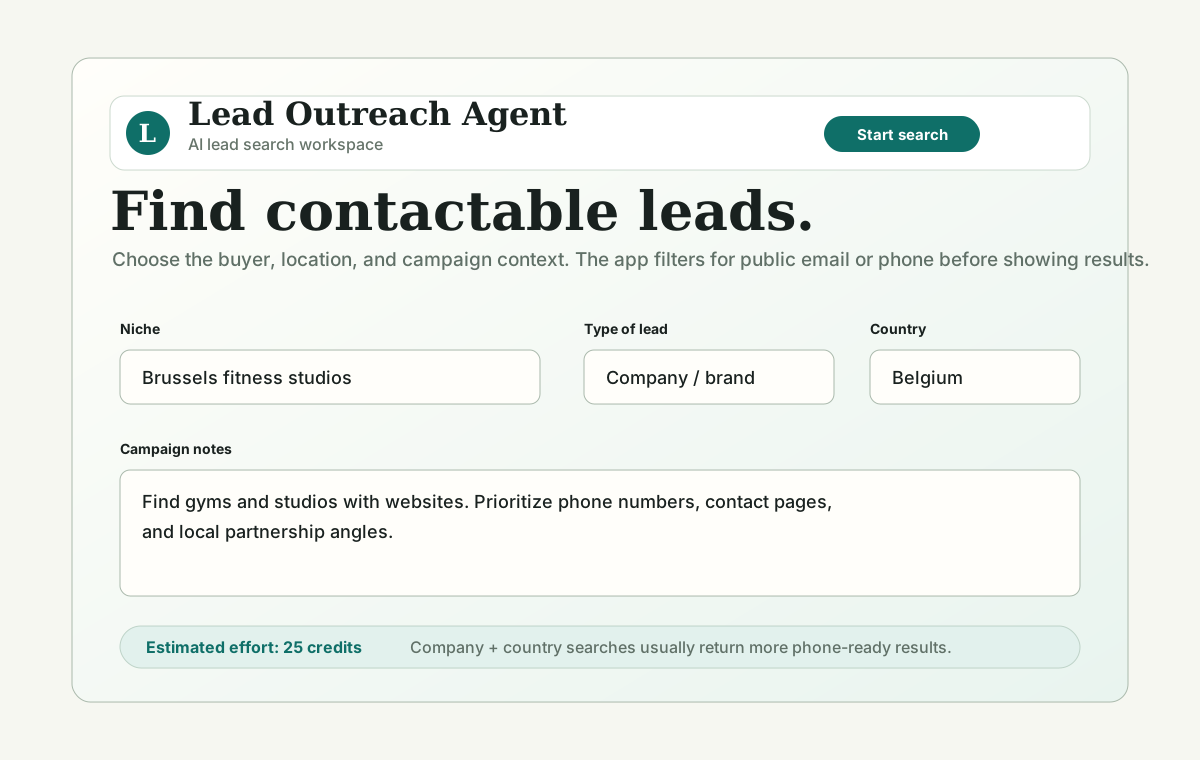
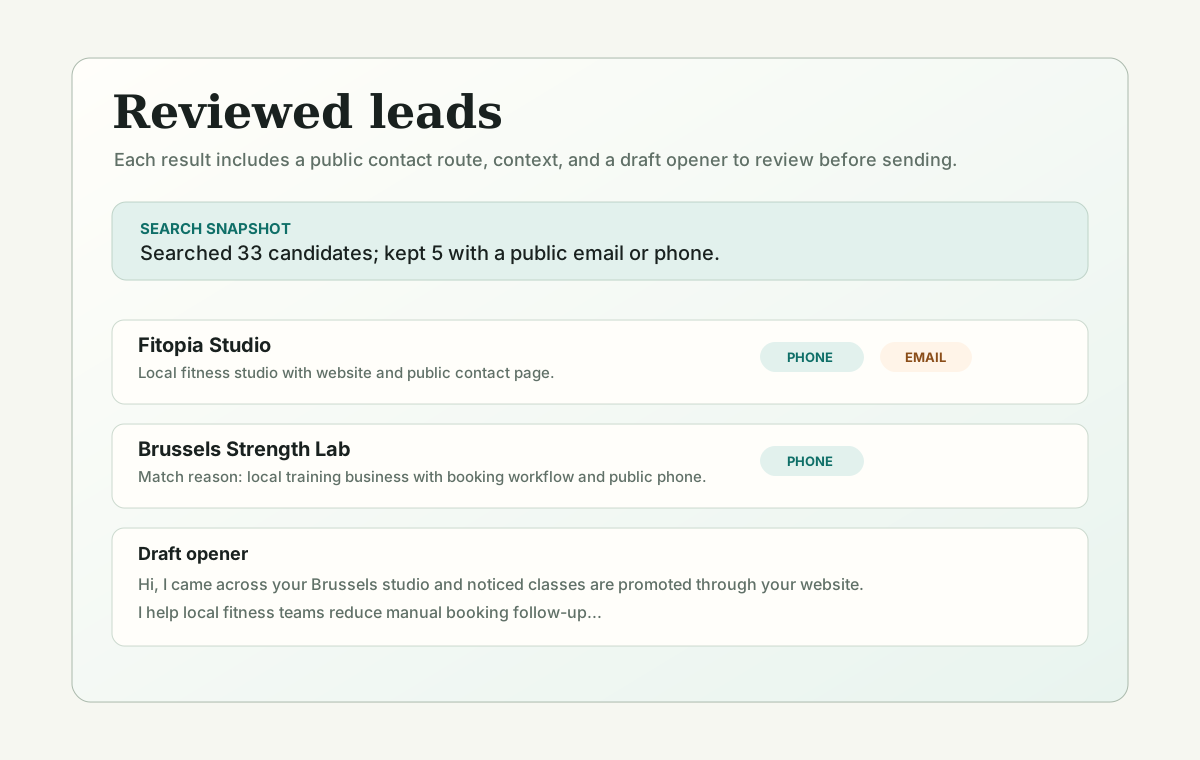
Each lead carries the public detail that made it a match, so the first message can be specific.
If there is no public email or phone, the lead does not make the list.
Use the lead-cost calculator to price a small, honest test before scaling.
Use these findings as context, not promised results. Each source includes its sample or method and the limitation that matters when applying it.
Teams that use AI to make each message more relevant report meaningfully higher reply rates - signal-personalized outreach around 15-25% versus a 3-5% cold average - while teams that use AI only to send more messages underperform the human baseline.
Aggregated analyses put B2B contact-data decay at roughly 22.5-30% per year - about 2.1% per month - and as high as 70% at fast-moving tech companies, with job-title changes the single biggest driver.
Sales reps report spending almost one workday per week prospecting; 92% of sales professionals using AI agents say AI benefits prospecting.
B2B buyers use an average of ten channels during the purchasing journey, and market leaders are four times more likely to deploy true one-to-one personalization.
Results need a usable public email or phone number and enough source context for review.
Each result includes context to help you check why the lead fits before outreach.
Drafts remain editable and should be reviewed for accuracy, relevance, and compliance before sending.
Seven tools worth knowing, ordered for a founder or small team that needs contactable, personalized outreach - not an enterprise data operation. Every tool here is genuinely useful; the ranking reflects fit for that audience.
| # | Tool | Best for | Watch out for |
|---|---|---|---|
| 1 | Lead Outreach Agent | Founders and small teams: niche-first, contactable leads with a first draft | Not a database - built for targeted campaigns, not 100k-row exports |
| 2 | Apollo.io | All-in-one contact database plus sequencing on a budget | Data accuracy varies; the generous free tier gets noisy fast |
| 3 | ZoomInfo | Enterprise data depth and buyer-intent signals | Expensive, annual contracts - overkill for a small team |
| 4 | Cognism | Phone-verified data with strong EU / GDPR coverage | Enterprise pricing and a sales-led onboarding |
| 5 | Clay | Custom enrichment and automation waterfalls | Powerful but setup-heavy, with a real learning curve |
| 6 | Lusha | Quick contact reveal through a browser extension | Phone reveals cost roughly 10x an email; credits burn fast |
| 7 | LinkedIn Sales Navigator | Advanced prospect search inside LinkedIn | No email or phone export - you still need a finder |
Most tools sit on a spectrum between raw database volume and reviewed, contact-ready relevance. Pick for your team size and motion.
| What you need | Database platform | Lead Outreach Agent |
|---|---|---|
| Primary output | Large filtered export | Reviewed, contactable shortlist |
| Discovery | You define filters | You describe the niche in plain language |
| Personalization | Separate step / tool | Match reason feeds an editable draft |
| Data freshness | Static record, decays over time | Public sources checked at search time |
| Ideal team | Scaled outbound org | Founder, small agency, lean sales team |
There is no single best B2B prospecting tool - the right pick depends on whether your bottleneck is data volume or personalized relevance. The ranking below is written for a founder or small team: tools that turn a niche into contactable, personalized outreach rank highest, while enterprise databases rank lower here not because they are weak but because they are built for a different scale. Full disclosure - Lead Outreach Agent is our tool, and we placed it first for this specific audience; the take on every other tool is written straight, with a real catch for each.
The job of a prospecting tool is to shorten the path from "who should we talk to" to "a specific first message they might reply to." Databases optimize the middle of that path - filtering and exporting - and leave discovery and personalization to you. For a small team, those two ends are where the time and the reply rate actually go, so that is where Lead Outreach Agent focuses.
The clearest lesson from teams adopting AI prospecting is that relevance, not reach, drives results. Signal-personalized outreach reports reply rates in the 15-25% range against a 3-5% cold average, while teams that use AI only to send more messages underperform the human baseline. A prospecting tool earns its place by making each message more relevant, which is exactly what a per-lead match reason is for.
A 275-million-record database is impressive until you remember it decays 22.5-30% a year. A record you cannot act on - no reachable route, or a stale one - is not a lead. Lead Outreach Agent inverts the priority: it only shows leads with a usable public email or phone, so every row is something you can actually contact today, with its source attached.
Good prospecting is a loop, not a one-time export: pick a niche and offer, run one small search, review contactable results and match reasons, send specific first messages, and use the replies to tune the next search. Running ten real leads first tells you whether a segment responds before you invest in scaling it - far cheaper than buying and cleaning a large list up front.
If you run a mature outbound org with SDR pods, CRM enrichment, and territory-scale list building, a full database platform is built for that scale and this tool is not trying to replace it. Lead Outreach Agent is for the founder, the two-person agency, and the lean sales team that needs relevant, contactable leads and a strong first message without standing up a data operation first.
Before committing, judge a prospecting tool on the two ends databases neglect. First, discovery: can you describe a buyer in plain language and get a relevant shortlist, or must you already know your filters? Second, actionability: does every result arrive with a reachable, sourced contact route and a reason it fits, or just a name to qualify later? Then weigh the pricing model against how you actually work - per-reveal credits punish phone-led prospecting, while per-search pricing with refunds on empty results rewards tight, testable campaigns. A tool that scores well on discovery, actionability, and honest pricing will out-convert a bigger database for a small team.
They are tools that help you find and reach business buyers - from large contact databases you filter and export to niche-first tools that return reviewed, contactable leads. The right one depends on whether your bottleneck is volume or relevance.
Small teams usually win on relevance, not volume, because they cannot personalize tens of thousands of records. A tool that returns fewer, contactable leads with a clear reason each fits - and drafts a first message - tends to convert better than a giant export.
Often yes. Lead Outreach Agent handles discovery, contactability, and the first draft; you can send and track from your own email tool or CRM. It is designed to fit alongside your stack, not replace it.
Those are database-first platforms optimized for scale and enrichment. This is discovery-first: it starts from a niche prompt and returns public, contactable leads with sources, which suits smaller, more targeted campaigns.
Start small - around ten. A tight first batch shows whether a niche responds before you spend on scaling it, and it keeps each message personal enough to actually get replies.
Public availability is not the same as consent. You must have a lawful basis, identify yourself honestly, and offer a working opt-out under the rules that apply to your recipients.
Start with one narrow search, review the contactability and match reasons, then use the related tools or benchmark pages to decide whether the niche is worth scaling.