Public sources at search time
Routes are read when you search and linked to their source, not replayed from a stale snapshot.
Selling to local businesses means one thing above all: you need a reachable owner or manager, not a pin on a map. Lead Outreach Agent is local lead generation software that searches public sources by category and geography, keeps only businesses with a usable public phone or email, and drafts a first message you can tailor to each one.
Pay only for what you use · $1 = 100 credits · Credits never expire · Zero-result searches refunded
Review the actual search setup and result format before spending credits or starting a campaign.
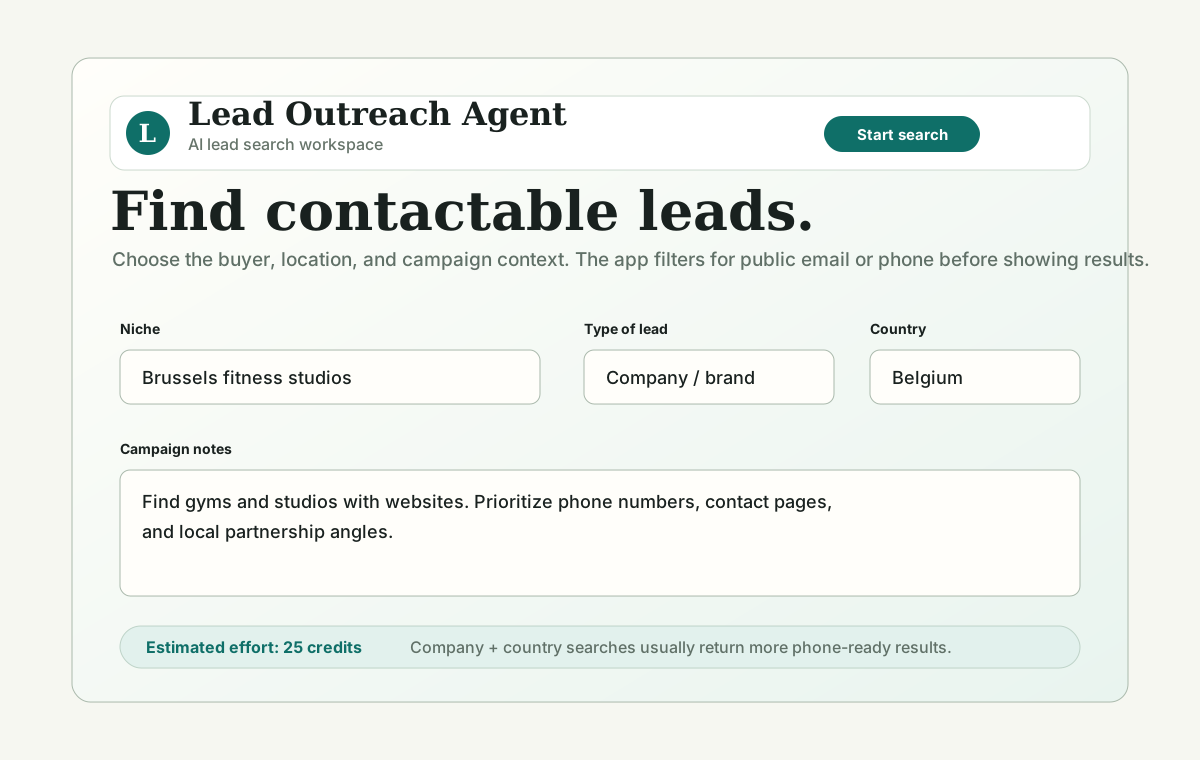
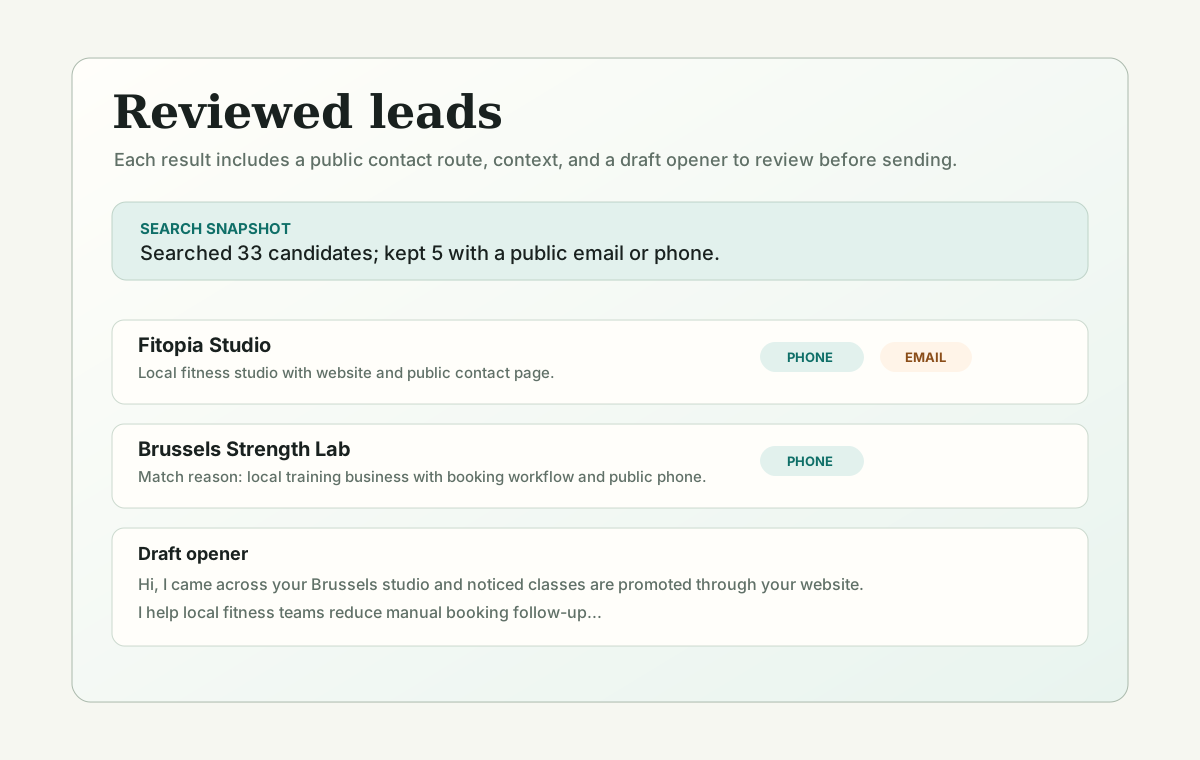
Routes are read when you search and linked to their source, not replayed from a stale snapshot.
Phone-first results are treated as real leads, not gaps to paper over.
See the map-focused workflow for finding nearby businesses with public routes.
Use these findings as context, not promised results. Each source includes its sample or method and the limitation that matters when applying it.
Aggregated analyses put B2B contact-data decay at roughly 22.5-30% per year - about 2.1% per month - and as high as 70% at fast-moving tech companies, with job-title changes the single biggest driver.
The report places the industry cold-call success benchmark at 2.7% and reports that an average of 1.55 call attempts was needed to reach a prospect in its current data.
B2B buyers use an average of ten channels during the purchasing journey, and market leaders are four times more likely to deploy true one-to-one personalization.
Results need a usable public email or phone number and enough source context for review.
Each result includes context to help you check why the lead fits before outreach.
Drafts remain editable and should be reviewed for accuracy, relevance, and compliance before sending.
Both start from a map. One hands you a raw dump; the other hands you reviewed, reachable businesses.
| Dimension | Raw map scrape | Lead Outreach Agent |
|---|---|---|
| What you get | Every listing, duplicates included | Businesses with a public contact route |
| Freshness | Snapshot, ages quickly | Public sources checked at search time |
| Contact route | Often missing | Required, phone or email |
| Fit signal | None | Match reason per business |
| Next step | Sort and clean | Edit a drafted first message |
Local business details change constantly - numbers, owners, hours, whether the place is still open. Static lists go stale fast, and outdated data already drives 20-30% bounce rates on old email lists. Software that reads public sources at search time, rather than replaying a database snapshot, gives you routes that were public when you searched, with the source attached so you can double-check.
You pick a category - dentists, gyms, cafes, law firms - and a place, and the software returns businesses that publish a contact route in that area. Instead of scraping every listing in a city and sorting later, it favors businesses with a real public site, phone, or address, so you get fewer, richer records rather than a dump full of duplicates and dead pins.
For local outreach, a phone number is often the best route, and local businesses tend to publish phones more reliably than emails. Lead Outreach Agent treats a public phone as a first-class result rather than padding the list with guessed addresses. When a business is phone-only or form-only, it says so, so you choose the contact route that actually fits the business and your offer.
Agencies selling review management, websites, booking systems, or ads use local search to qualify a gap before pitching - a dentist with a listing but few recent reviews, a studio still booking by phone. The match reason captures that signal so the first message can reference it. That is the difference between "we offer marketing services" and "I noticed your booking page still routes to a form."
Phone-ready is a starting point, not permission. Local calling and messaging rules vary, and a public listing does not waive them. Lead Outreach Agent organizes public research and a first draft; you confirm the lawful basis, honor do-not-call and opt-out rules, and review each business before reaching out. The software makes the work faster, not the responsibility smaller.
Start with a category you sell to and a single city - dentists in San Diego, gyms in Austin. Ask for a small batch and look at what each business publishes: a phone, an email, a booking page, or only a form. Note the gap you can help with, because that becomes your opening line. Prefer businesses with a real site and recent activity over bare listings, and skip anything you cannot verify at its source. Then edit the drafted message so it references the specific signal you found. One tight city run shows whether the category responds before you expand to the next town.
It is software that finds nearby businesses that match a category and location and gives you a way to contact them. Lead Outreach Agent adds a stricter rule - only businesses with a public phone or email are shown - plus the source and a reason each fits.
Both, depending on what each business publishes. Local firms often list a phone before an email, so many results are phone-first. The software labels form-only businesses rather than inventing an address.
A scraper returns every pin, duplicates and dead listings included, and leaves the cleanup to you. This favors businesses with a real public presence and a usable route, and attaches a match reason, so you get fewer but more actionable records.
It reads public sources at search time and records where each route came from, which reduces the staleness that drives high bounce and disconnect rates. You should still verify a route before you use it, especially phone numbers.
Yes. Agencies use it to spot a visible gap - few recent reviews, manual booking, no website - and the match reason captures that signal so the first outreach message can reference it specifically.
No. A public listing does not override do-not-call, consent, or local calling rules. You remain responsible for compliance and for reviewing each business before contact.
Start with one narrow search, review the contactability and match reasons, then use the related tools or benchmark pages to decide whether the niche is worth scaling.