Priced per search, not per phone
Zero-result searches are refunded. You are not charged ten credits to learn a number is disconnected.
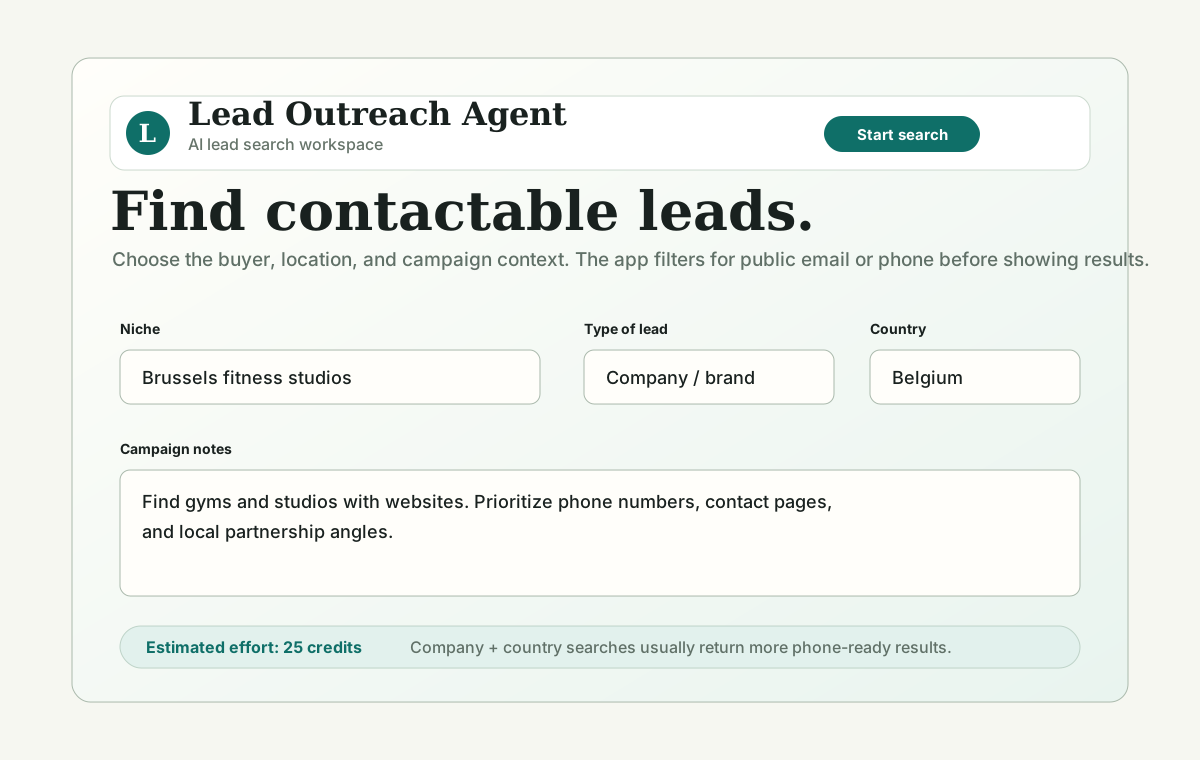
Lusha is a browser-extension contact database priced by credits, where an email costs one credit and a phone number costs ten. Lead Outreach Agent works differently: describe the businesses you want, and it searches public sources, keeps only leads with a real public email or phone, explains why each fits, and drafts a first message you can edit before sending.
Pay only for what you use · $1 = 100 credits · Credits never expire · Zero-result searches refunded
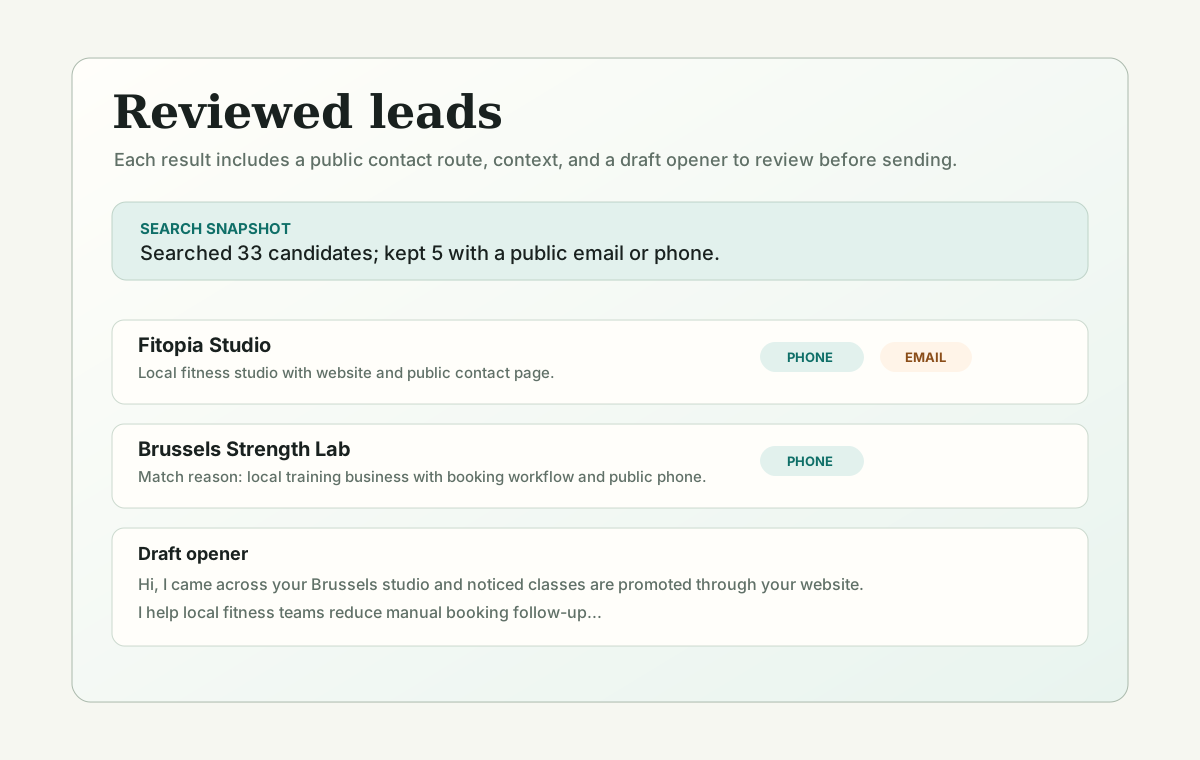
Review the actual search setup and result format before spending credits or starting a campaign.
Zero-result searches are refunded. You are not charged ten credits to learn a number is disconnected.
Each contact route links back to where it was published, so outreach is easy to justify.
Use the lead-cost calculator to size a small, honest first test.
Use these findings as context, not promised results. Each source includes its sample or method and the limitation that matters when applying it.
Aggregated analyses put B2B contact-data decay at roughly 22.5-30% per year - about 2.1% per month - and as high as 70% at fast-moving tech companies, with job-title changes the single biggest driver.
Sales reps report spending almost one workday per week prospecting; 92% of sales professionals using AI agents say AI benefits prospecting.
B2B buyers use an average of ten channels during the purchasing journey, and market leaders are four times more likely to deploy true one-to-one personalization.
Results need a usable public email or phone number and enough source context for review.
Each result includes context to help you check why the lead fits before outreach.
Drafts remain editable and should be reviewed for accuracy, relevance, and compliance before sending.
A side-by-side of the model, not a feature dump. Both tools find contacts; they start from opposite ends of the workflow.
| Dimension | Lusha | Lead Outreach Agent |
|---|---|---|
| Pricing model | Credits per reveal (phone ~10x email) | Per search; zero-result searches refunded |
| Starting point | Database filters / browser extension | Plain-language niche prompt |
| Contact guarantee | Reveal first, verify after | Only public, contactable leads are shown |
| Source transparency | Aggregated database record | Links to the public source per lead |
| First outreach | Not included | AI-drafted first email you edit |
| Best fit | Large sales-ops volume | Niche, local, founder, and agency campaigns |
Lusha's advertised entry price hides a per-reveal cost. Because a revealed phone number costs about ten times a revealed email, one fully revealed contact runs roughly eleven credits - so a 400-credit starter plan covers only about three dozen complete contacts a month. Independent reviews also flag that unused monthly credits roll over only up to a cap, and annual credits reset at year end.
Lusha publicly cites around 81% data accuracy. That still means roughly one in five records can be outdated - and with a reveal-based model you spend a credit before you learn whether the number connects. Reviewers report more complaints about phone accuracy than email accuracy, including disconnected numbers and wrong departments. B2B contact data decays fast enough (see the research below) that any static database drifts between the day it was collected and the day you dial.
Database tools assume you already know which companies to filter for. Lead Outreach Agent starts a step earlier, from a plain-language description of the customer you want - "independent gyms in New York that book classes manually," say - and returns businesses that publish a usable contact route, each with the public source and a reason it matched. You review fit before you ever draft outreach, instead of exporting a list and scrubbing it.
This is not a claim that a database is useless. If you run a large sales-ops motion, need CRM enrichment at scale, or want a browser extension that reveals a contact on any LinkedIn profile you open, a mature database like Lusha or Apollo is built for that. Lead Outreach Agent is the better fit for niche and local campaigns, founder-led sales, agency client acquisition, and creator or sponsor lists - where relevance and a defensible source matter more than raw volume.
The workflow is short on purpose: define the search, watch it move through public sources and contact checks, review the kept leads and their match reasons, then edit the drafted first email and send it from your own tools. You stay responsible for lawful basis, opt-outs, and final review - the app organizes public research and a starting draft, it does not grant permission to contact anyone.
It depends on how you prospect. Lusha charges per reveal and phone numbers cost about ten times an email, so phone-led prospecting gets expensive fast. Lead Outreach Agent charges per search and refunds credits when a search returns nothing, which is usually friendlier for small, targeted campaigns than for high-volume list building.
No. Lusha's extension reveals a contact on a profile you are already viewing. Lead Outreach Agent works the other way around - you describe the audience and it finds matching businesses with public contact routes, so it is a discovery tool rather than a reveal-on-hover extension.
Only from public sources - contact pages, footers, public listings, and profiles - and only leads with a usable public email or phone are shown. Nothing is guessed from private data, and each lead links back to where its contact route was published.
No tool should promise a fixed accuracy number, because B2B contact data decays roughly 22.5-30% a year. Lead Outreach Agent reduces stale-data risk by pulling from live public sources at search time and by recording the source so you can verify before you send.
You can run repeated searches, but it is designed for relevance over raw volume. If you need tens of thousands of records with CRM enrichment, a large database platform is a better fit; if you need reviewed, contactable leads for a specific campaign, this is faster to act on.
No. Public availability is not consent. You remain responsible for lawful basis, clear sender identification, and a working opt-out under the rules that apply to your recipients.
Start with one narrow search, review the contactability and match reasons, then use the related tools or benchmark pages to decide whether the niche is worth scaling.